How we updated an exhibit from 2017 in 2025 by implementing AI tools

Last year, I received the task to update the game Speed date with life I worked on in 2017.
In the Experimenta Science Center it looks like this: you enter a beautiful futuristic white dome with a sitting bench inside. You see a microphone in the middle, and a display on the ceiling, as well as game rules written on the wall.
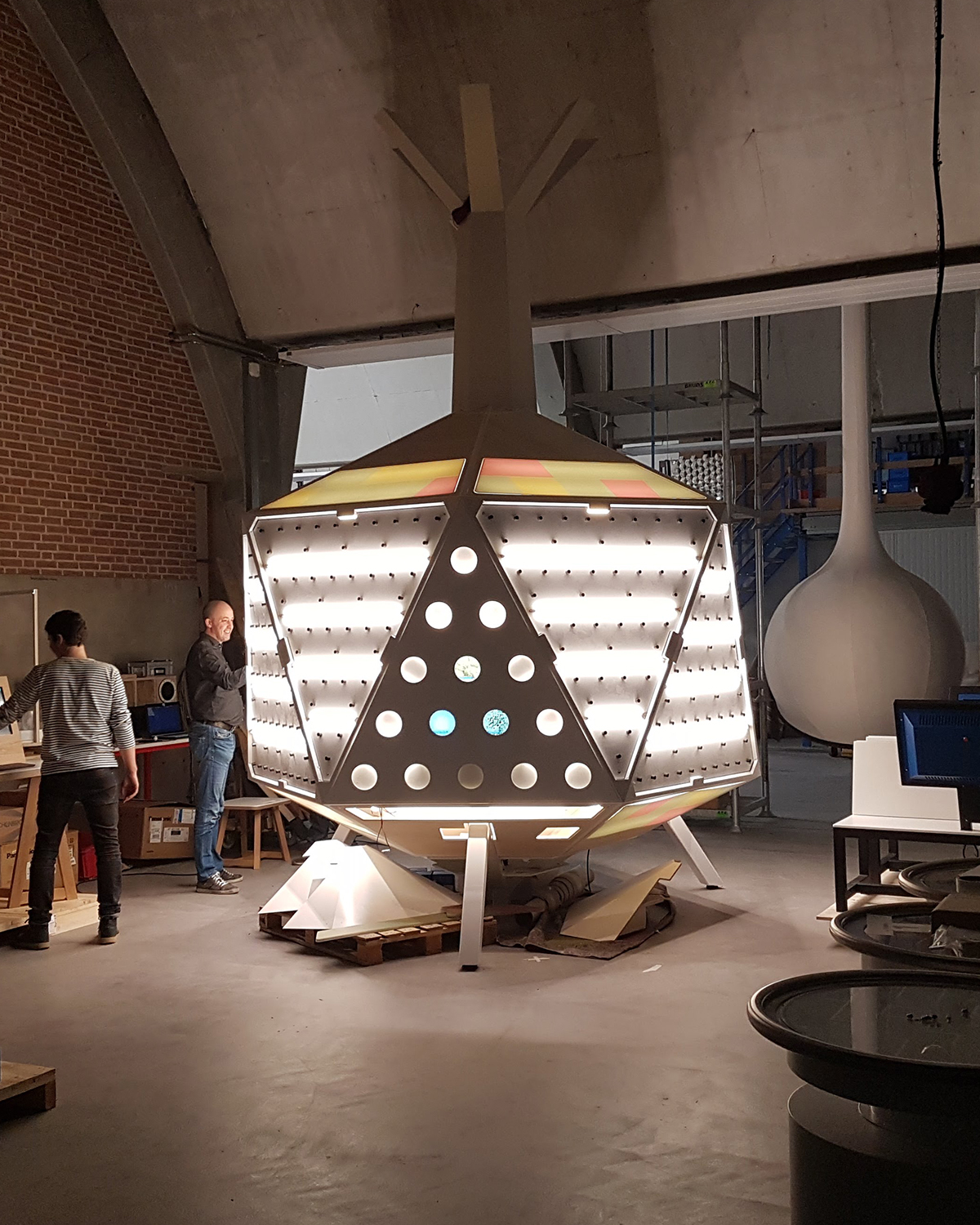

The game loop is simple: You play by trying to guess the identity of one of eight randomly selected objects related to nature. Four of them are alive (bacteria, palm tree, etc.) and the other four are not (iceberg, volcano, etc.). The goal of the game is to guess if the object is alive or not alive, by asking question in the microphone. Your voice is the only input for the game. The game will give you very vague answers, but ones that will hopefully steer you in right direction.
After you asked 5 questions, you need to answer the question “Am I alive or not?”. At the end of the game the object reveals itself on the screen. You won if you guessed correctly.
In 2017 we didn’t have advanced AI systems as we do now. We used speech recognition tools of that time, for input, to check if the recording of a user’s question was similar to one of the 10 questions that you were allowed to ask.(“How old are you?”, “What do your friends say about you?”, etc.)
If it matched, we played a pre-generated speech-to-text answer. We made the game available in English and German. The user was able to switch the language by pressing a corresponding physical button on the furniture.
In 2025, eight years after the first release, we were tasked by Experimenta to update the exhibit to modern standards. ChatGPT and other AI tools already became noticeable parts of our lives, thus the original exhibit started to feel outdated. The main goal for the update was to include modern AI into the game.
You need to take into consideration that the originally designed furniture of the exhibit is still there, the hardware setup (computer, microphone, audio connection, LED lights, physical buttons, a small screen) is still there, and that your old software was designed with the design of the general exhibition in mind. All of these are of course not impossible to change, but they obviously have different budget considerations. Also, it is not always possible to replace a small low-end computer with a large high-end one: often the size of the furniture was never designed to fit a larger pc.
We advised our client on the different options when it comes to using AI. One of the main choices is offline(local) vs online AI (API) tools. Here is the quick comparison.
Hardware requirements:
High-end
Internet connection:
Not required
Stability:
Will work in the same way after many years
Privacy:
Data does not leave the exhibit computer
Speed:
Usually slower than online alternatives
Costs:
Free
Output quality:
Mostly decent
Hardware requirements:
Low-end
Internet connection:
Mandatory
Stability:
AI servers can be offline and change their APIs
Privacy:
Data is sent to AI companies to be processed
Speed:
Usually fast but always some latency due to internet connection
Costs:
Cost for API calls
Output quality:
Latest state of the art
After discussions with the client, we decided to use ChatGPT Realtime Speech API – the speed, the quality and the desire to keep the same computer were the main constrains for this online choice.
We started to develop a new software. The game loop stayed mostly the same, the main changes were in the background technology. In order for AI to play a game, we created a detailed prompt describing the rules. Now AI was responsible for speech recognition part and could answer any question, not only 10 hardcoded ones as before.
This created new challenges. In the old version, all the answer were pre-made and were purposely kept vague. For example, now nothing would stop you to say “just tell me which object you are!”, the rules of the game needed to be extended to account for such possibility of cheating.

The improvement to the gameplay was noticeable. Now you were able to ask the object any question you liked, for example “I know you can’t tell who you are, but if you were a Pokemon, hypothetically, which one would you be?”. This allows kids of different age groups reference characters and shows they are familiar with.
The second important improvement compared to the old version was language handling. Previously the game functioned only in German and English, but since AI was able to speak almost any language we decided to make use of this advantage. So instead of switching between two languages, the language button flow was changed: users were asked to speak in any language, and the AI recognized it and continue the game in it.
Not only that. We always started the game by explaining the game rules. Each time the game was started in a new language, we saved the new rule explanation audio. Having generated the rules once, the next person speaking this language will hear the instructions quicker.
The visual design on the small screen was also updated by us, to make it more modern.
After a week we received the first feedback from the client: the new version became very popular and the visitors were happy. After a month I received a very heart-warming message from the client: a group of children with visual disabilities were visiting the museum, and one girl really liked the game and played guessing all of the eight objects. After she finished, she said “it feels like I have a new friend to play with”.
For me personally, as a developer of this exhibit, this is one of the most valuable pieces of feedback I received in my life. I work a lot with AI, and in my opinion it is a great tool if it is used at the right time and at the right place. I don’t believe that AI should become a mandatory part of every software and every museum exhibit in the future. So rather than using it because AI is a hype, try to understand what value it can give you.
For me, the updated version of the Speed date with life exhibit is a great example of how modern AI technology creates an enjoyable experience during a museum visit.
Header photo by Matt Stark.
We can tell you more about how we use (and won’t use) AI in our projects.